

Adrenaline Bitartrate
December 8, 2025
PRALIDOXIME IODIDE INJECTION 500 MG
December 8, 2025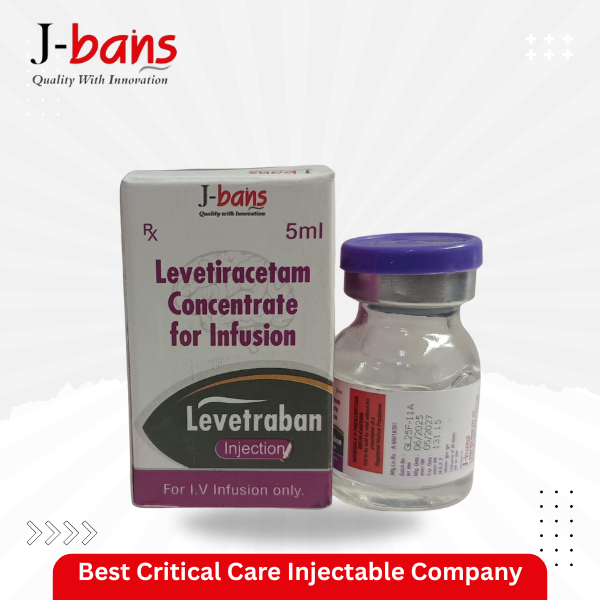
Levetiracetam Concentrate for Infusion
₹128.85
Levetiracetam Concentrate for Infusion (Levetraban) is a sterile, intravenous (IV) antiepileptic medication designed for the management of seizures when oral therapy cannot be used. It is a concentrated solution that must be diluted and infused through a vein by a qualified healthcare professional.
This formulation delivers levetiracetam directly into the bloodstream, providing rapid therapeutic levels, making it suitable for patients who are unable to take oral medication due to clinical conditions such as post‑surgery recovery, acute illness, or gastrointestinal intolerance.
Key Features & Benefits of Levetraban
- Active Ingredient: Levetiracetam – a broad‑spectrum anticonvulsant.
- Route: Intravenous infusion (IV).
- Alternative to Oral Therapy: Ideal when oral intake is not feasible.
- Helps control partial onset, primary generalized tonic‑clonic, and myoclonic seizures.
- Facilitates adjustable dosing tailored to clinical needs.
Indications
Levetiracetam Infusion is indicated for:
- Adjunctive therapy in partial onset seizures in adults, adolescents, and children from 4 years of age.
- Monotherapy in newly diagnosed partial seizures in adolescents and adults aged 16+.
- Primary generalized tonic‑clonic seizures in patients 12 years and older.
- Myoclonic seizures in patients 12 years and up with juvenile myoclonic epilepsy.
Dosage & Administration
- Dilution: Dilute the concentrate in at least 100 mL of compatible diluent (e.g., 0.9% sodium chloride).
- Infusion Time: Typically given as a 15‑minute intravenous infusion.
- Dosing Schedule: Usually administered twice daily to maintain therapeutic levels.
- Dose Range: Common clinical practice ranges from 500 mg to 3000 mg total daily dose, based on physician prescription and patient response.
(Note: Exact doses must always be prescribed by a qualified healthcare provider.)
Precautions & Safety
- Only for medical use under professional supervision.
- Not recommended for long‑term IV administration beyond a few days unless clinically justified.
- Renal impairment may require dosage adjustment.
- Monitor for dizziness, somnolence or sedation, especially when starting therapy.
Side Effects
Common adverse reactions may include:
Serious but rare effects may include hypersensitivity reactions and serious skin conditions; immediate medical attention is required.
Frequently Asked Questions (FAQs)
- What is Levetiracetam Infusion (Levetraban)?
It is an IV‑administered antiepileptic medication used when oral levetiracetam cannot be given. - How is it administered?
A healthcare professional dilutes and infuses it intravenously, usually over about 15 minutes. - What types of seizures does it treat?
It is used for partial onset seizures, myoclonic seizures, and primary generalized tonic‑clonic seizures. - Can Levetiracetam Infusion replace oral therapy?
Yes — it is an alternative when oral medication is temporarily not feasible, with equivalent dosing maintained. - How often is it given?
Typically twice daily, but the exact schedule is determined by a physician based on the patient’s condition. - Are there common side effects?
Yes — sleepiness, headache, dizziness, nausea, and fatigue are among the common reactions. - Can it cause serious reactions?
Rare but serious effects like severe rash or allergic reactions may occur; seek medical attention immediately if noticed. - Is monitoring needed during infusion?
Yes — professional monitoring ensures safe infusion, appropriate dosing, and early detection of adverse effects.
Explore the trusted Critical Care PCD Company in India – J-Bans ICU Care – offering high-quality ICU medicines and franchise opportunities nationwide.



Reviews
There are no reviews yet.